


What Is RAAC? Understanding the Material Behind the Headlines
- Wed, October 28, 2026
- by Demi Keeble
Is RAAC automatically dangerous? A few years ago, most building owners had never heard of Reinforced Autoclaved Aerated Concrete. Some structural engineers knew what it was. Some estate teams were aware that it might be present in parts of their portfolios. Beyond that, RAAC rarely featured in public discussion. Today, it is difficult to open a newspaper without encountering another story about surveys, school closures or concerns about ageing buildings.
That shift has created an unusual situation. A construction material that was once routinely specified and largely forgotten has become the focus of national attention. Yet despite the volume of coverage, many of the same questions continue to surface.
What exactly is RAAC? Why was it used so extensively? Why are concerns emerging now? And perhaps most importantly, does finding RAAC automatically mean a building is unsafe?
The answers require a little more context than most headlines allow.
RAAC Stands for Reinforced Autoclaved Aerated Concrete
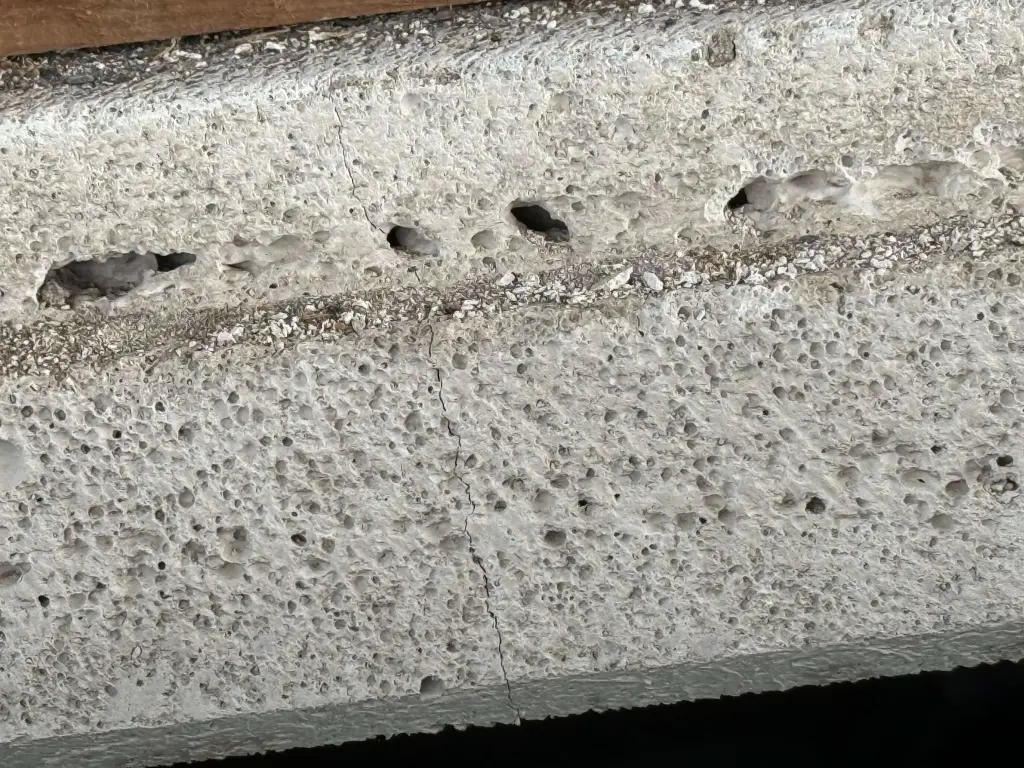
Developed during the twentieth century, it is a lightweight form of precast concrete that was widely used in the construction of roofs, floors and walls. Unlike traditional concrete, RAAC contains millions of tiny air pockets formed during the manufacturing process. These air pockets significantly reduce the weight of the material while still allowing it to perform a structural role.
Steel reinforcement is then incorporated within the planks or panels to provide additional strength and stiffness. The result was a product that offered many of the advantages of precast construction without the weight associated with conventional reinforced concrete.
And for several decades, it was regarded as a practical and efficient building material and thousands of structures across the UK were constructed using RAAC, many of which remain in use today.
One of the dangers of discussing RAAC in 2026 is that we view it entirely through the lens of today's concerns. When engineers and architects began specifying RAAC in the post-war decades, it was not seen as a problematic material. Quite the opposite. It addressed some very real challenges facing the UK construction industry, most of which are still relevant today.
After the devastation of WWII, the country needed schools, hospitals, offices and public buildings, often at scale and at speed. Traditional construction methods could not always deliver what was required within the available budgets and programmes. Lightweight prefabricated systems offered an attractive alternative, helping reduce construction times and allowing large roof spans without placing excessive loads on the supporting structure.
In that context, the popularity of RAAC becomes much easier to understand. And it’s worth remembering that many of the buildings that now attract attention because they contain RAAC have, after all, remained in service for fifty years or more.
Public discussion has tended to focus on schools and hospitals, largely because those sectors have received the greatest media attention. In reality, RAAC was used across a much wider range of buildings. It has been identified in civic offices, libraries, leisure centres, emergency services buildings, housing developments, courts and commercial and industrial premises, as well as healthcare and educational facilities.
The common thread is often age rather than building type. Properties constructed or refurbished between the 1950s and the 1990s are generally the most likely to contain RAAC, particularly where precast roof planks were specified.
This is one reason why many organisations have undertaken surveys in recent years. Buildings that have operated without incident for decades are now being reassessed as a better understanding of the material's long-term behaviour emerges. But in reality, the concerns surrounding RAAC are not simply a consequence of its age.
Like any structural material, RAAC is affected by how it has been designed, installed, maintained and exposed to environmental conditions throughout its life. Water ingress, alterations to buildings, inadequate support arrangements and deterioration of reinforcement can all affect performance over time.
What makes RAAC different is that it does not always behave in the same way as traditional reinforced concrete. Structural failures can occur with relatively limited visible warning signs, creating challenges for those responsible for managing affected buildings. There is also very little redundancy in alternative load paths for RAAC, as typically found in reinforced concrete. As a result, guidance from organisations such as the Institution of Structural Engineers and the Standing Committee on Structural Safety has evolved significantly over recent years.
The industry's understanding of the risks has improved, but so too has its understanding of how to assess and manage them. Much of the public debate in the 2020s has focused on the existence of RAAC. But our engineers at RCS are generally more interested in understanding condition and defining the most appropriate response to different levels of condition. What to do with RAAC is perhaps the most frequently asked question and the answer is nuanced.
The Presence of RAAC Does Not Automatically Mean a Building Is Dangerous
It would be wrong to assume that the material presents no risk simply because it has performed satisfactorily in the past.
A building with well-maintained RAAC in good condition presents a very different level of concern from one with evidence of significant deterioration, water ingress, or structural distress. Two apparently similar buildings can produce very different survey results.
This is why engineers focus on nuanced assessment rather than assumptions.
Finding RAAC Is Only the Start
Finding RAAC is not a verdict on a building's safety. It is the start of a process to understand the condition of the material and the associated risks. One reason RAAC has become such a significant issue is that its discovery often creates difficult decisions for building owners.
- Should a building with RAAC remain open?
- Are mitigation measures always required on a building with RAAC?
- What information should be shared with the insurers of a building with RAAC?
- What responsibilities do duty holders have?
These questions cannot be answered simply by confirming that RAAC exists. Surveys, testing, risk assessments and engineering analysis are all needed to reduce uncertainty and provide a clearer understanding of how a structure is performing. The objective is not to prove that every building is safe, nor to assume that every building is unsafe. The objective is to understand the level of risk and determine the most appropriate response.
Some buildings have required significant intervention including closure. Others have remained operational while monitoring, mitigation measures or remediation works are carried out. This is why mature RAAC management focuses on evidence-led decision-making rather than broad assumptions based solely on the presence of the material.
For building owners, understanding the condition of the RAAC is far more valuable than simply knowing it exists. Its presence raises important questions, but it does not automatically provide the answers.
Understanding what RAAC is provides useful context. Understanding the condition of the RAAC in a specific building ultimately enables informed decisions about its future.
Determining condition requires a specialist survey conducted by experienced structural engineers.
What is RAAC? Further Reading
This article forms part of RCS's guide to understanding and managing RAAC in buildings. The series explores risk categories, insurance considerations, duty holder responsibilities and the practical decisions building owners face when RAAC is identified.
Need Advice on a Building That May Contain RAAC?
RCS provides specialist surveying, testing, risk assessment and remediation advice for buildings containing RAAC. Contact the team to discuss a project or arrange an initial consultation.
Frequently Asked Questions
Below are answers to some of the most common questions about RAAC, including what it is, why it was used, where it can be found and what its presence means for building safety. If you have further questions or need specialist advice on identifying, assessing or managing RAAC in your building, please get in touch with our team.
What is RAAC?
RAAC stands for Reinforced Autoclaved Aerated Concrete. It is a lightweight form of precast concrete that was widely used in UK buildings between the 1950s and 1990s, particularly in roofs, floors and walls. Thousands of schools, hospitals, offices and public buildings were constructed using RAAC components during this period.
How is RAAC different from standard concrete?
Unlike traditional reinforced concrete, RAAC contains millions of tiny air pockets created during manufacture. This makes it significantly lighter than standard concrete while still providing sufficient structural strength for many applications.
Where was RAAC used?
RAAC was used in a wide range of buildings, including schools, hospitals, offices, leisure centres, housing developments and civic buildings. It is most commonly found in properties built or refurbished between the 1950s and 1990s.
Why was RAAC used?
RAAC was popular because it was lightweight, economical and quick to install. It allowed large roof and floor spans while reducing the load on the supporting structure, making it particularly attractive for post-war construction programmes.
When was RAAC used in the UK?
RAAC was widely used in UK construction between the 1950s and the 1990s. Buildings constructed or refurbished during this period are the most likely to contain RAAC components.
Is RAAC automatically dangerous?
RAAC is not automatically dangerous. Concerns arise because ageing, water ingress and deterioration can affect its structural performance over time. In some circumstances, RAAC can fail with relatively limited visible warning signs, which is why surveys and risk assessments are important.
Does RAAC mean a building is unsafe?
No. The presence of RAAC does not automatically mean a building is unsafe. The level of risk depends on factors such as the condition of the material, evidence of deterioration, structural arrangement and the findings of a professional assessment.
Can a building with RAAC stay open?
Yes. Many buildings containing RAAC remain operational. The decision depends on the condition of the material, the level of risk identified and whether appropriate monitoring, mitigation measures or remediation works are in place.
How can RAAC be identified?
The most reliable way to identify RAAC is through a specialist structural survey. Experienced engineers can inspect the building, identify potential RAAC components and recommend any further investigations that may be required.
